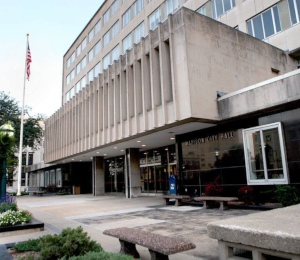
Dane County District Attorney's Office

Common Questions

Who should I report a crime to?

Call the police or sheriff’s department where the crime occurred. The police investigate reports of crime, and may refer criminal charges to the District Attorney’s Office.

Who decides whether to make an arrest?

The police. Wisconsin law makes arrest mandatory in certain circumstances.

Who decides to press charges?

Only the District Attorney’s Office can issue or decline to issue formal charges. The opinions and facts provided by a victim are important and the prosecutor will take these into account when evaluating a case. However, the final decision is up to the prosecutor.

Please note that municipal violations such as speeding tickets are handled in municipal courts where one exists, such as the City of Madison Municipal Court, and are prosecuted by city attorneys, not assistant district attorneys.

A person was just arrested. What happens next?

Persons charged with misdemeanor crimes may be able to post bail and be released, and will have to return to the Dane County Courthouse at a later date and enter a plea of not guilty, guilty, or no contest.

Persons charged with felony crimes MUST WAIT in jail for an arraignment hearing, which is held before a court commissioner. The defendant is formally charged and enters a plea of guilty, not guilty, or no contest. Arraignment hearings are held Monday through Friday at 1:30 p.m. at the Public Safety Building (Dane County Jail), 115 W. Doty St, Madison. The jail is adjacent to the courthouse.

How can I find out if someone is in the Dane County Jail?

Call the jail at (608) 284-6800 or the VINE system at 1-877-418-8463.

When is the next court date in a criminal case?

Check Wisconsin Circuit Court Access: www.wcca.wicourts.gov/index.xsl.

I need an attorney and cannot afford one. What can I do?

The District Attorney's Office cannot provide legal advice. Call or go to the State Public Defender’s Office at (608) 266-9150. Their office is located at 17 S. Fairchild Street, 2nd Floor, Madison.

What is the difference between a felony and a misdemeanor?

A felony is a crime carrying a maximum penalty of more than one year of incarceration. A misdemeanor is a crime carrying maximum confinement time of one year or less in jail (not prison).

What is a bail or bond?

These terms describe a debt intended to insure the defendant's future appearances in court. A judge or court commissioner sets the amount of the bond. Factors influencing the amount include the seriousness of the charge and the defendant's criminal history, ties to the community, and history of making prior court appearances. There are two general types: Signature bonds do not require the defendant or a third party to pay money to the court, unless the defendant later fails to appear. Cash bonds require the full amount of the bond to be paid in cash before the defendant can be released. If the defendant appears at all future court dates, most if not all of the monies are returned to the person posting the bond.

What is a bench warrant?

A bench warrant is a court order authorizing an arrest of a person, typically issued after a defendant fails to appear for a court appearance.

What is the difference between a crime and a forfeiture?

A crime is punishable by incarceration or loss of liberty. A forfeiture is punishable by loss of money only.

What is the difference between a crime and a traffic ticket?

A person charged with a crime may be ordered to jail or prison by a judge; a traffic ticket penalty includes a forfeiture and possible points assessed against a driver’s license.

A defendant has an attorney. Can he or she talk to anyone in the DA’s office about the case?

No. All attorneys, including prosecutors, are governed by the Rules of Professional Conduct, which prevent them from speaking directly to anyone who is already represented by an attorney on the same matter. The defendant should ask his or her attorney to contact the District Attorney's Office on the defendant’s behalf.

A defendant does not have an attorney. Can he or she talk to anyone in the DA’s office about the case?

Yes, but there are limitations. Wisconsin Supreme Court Rule 20:3.8 prohibits prosecutors from providing legal advice to defendants, including whether to get a lawyer; whether to accept or reject a settlement offer; whether to waive important procedural rights; or give an opinion as to how the court or a jury is likely to rule in the case. Specifically, prosecutors may not assist a defendant in the completion of guilty plea forms, forms for the waiver of a preliminary hearing, or forms for the waiver of a jury trial.

If someone needs legal advice, he or she should call a private attorney, Legal Action of Wisconsin at (608) 256-3304, the State Bar of Wisconsin at (608) 257-4666, the State Public Defender’s Office at (608) 266-9150. Free legal clinics are held at the Dane County Courthouse. For more information, visit www.countyofdane.com/clrkcort/prepare/assistance.aspx. Citizens have a constitutional right to represent themselves in court if they make an informed, voluntary decision to do so.

How can one obtain a copy of a police report?

As a general rule, police reports may be considered public records and may be subject to release, in whole or in part. Contact the police department that investigated the case to request a copy of the report. However, in cases being investigated, prosecuted, or that are sensitive, the police must weigh under applicable law whether the public’s interest in releasing the document(s) outweighs the public’s interest in confidentiality. Therefore, it is possible that one may not be able to obtain a copy of the police report, in whole or in part, depending on the individual circumstances of the case.

How can someone find where a prisoner is or who his or her probation agent is?

Call the Department of Corrections Central Records at (608) 240-3750 and provide the person’s name, date of birth, or inmate number.

Where can someone get a restraining order?

Restraining orders must be applied for in the Records Center in the Dane County Courthouse, located at 215 S. Hamilton Street, Room 1002, Madison.

How do citizens apply for an occupational license?

Contact the Wisconsin Department of Motor Vehicles at (608) 266-2261.

A divorce is sought, or someone needs help getting child support.

The District Attorney’s office cannot provide legal advice or take legal action in family matters.

The Dane County Family Court Commissioner’s office handles child support, custody, paternity and other matters during divorce proceedings, and also after a divorce has been granted. However, only a judge may formally grant a divorce. The phone number for the Family Court Commissioner’s Office is (608) 266-9048. Their office is located in the Dane County Courthouse, 215 S. Hamilton Street, Room 2000, Madison. Family Court forms are available on their website: www.co.dane.wi.us/clrkcort/prepare/formFamily.aspx.

The Dane County Child Support Agency handles child support matters. The phone number is (608) 266-4031. That office is located in the City County Building, 210 Martin Luther King Jr. Blvd, Room 365, Madison. Child Support forms are available here: www.danechildsupport.com.

For legal advice, contact a private attorney, Legal Action of Wisconsin at (608) 256-3304 or the State Bar of Wisconsin at (608) 257-4666. Free legal clinics are held at the Dane County Courthouse; visit www.countyofdane.com/clrkcort/prepare/assistance.aspx.