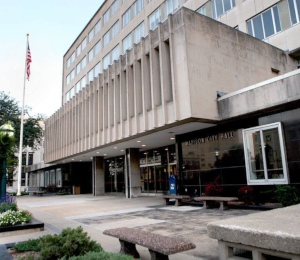
Victim Witness Unit
Dane County District Attorney's Office
Victim Witness Unit
215 S. Hamilton St. #3000,
Madison, WI 53703-3297
Phone: (608) 266-9003
Fax: (608) 261-9766
Suzanne Beaudoin, Director
Chapter 950 of the Wisconsin Statutes requires counties to enforce victim and witness rights.
The Victim Witness Unit enforces those rights and advocates to ensure that victims and witnesses
are treated with dignity and respect. Staff assists victims and witnesses throughout the criminal
court process by answering questions, keeping victims and their families informed of case
development, providing information and referrals to community service providers, assisting
with restitution, and offering personal assistance when possible. Please contact us with any
questions.
Victim Witness Unit Brochures
Witness Information
Crime Response Program
The Criminal Court Process
Domestic Violence Program
Children and Domestic Violence
Crime Victim Compensation Program
Tips for victims of crime: working with the media
Resources for Victims
Victim & Witness Rights
-
To attend court proceedings.
-
To be accompanied to court by a service representative.
-
To a speedy disposition of the case.
-
To have his/her interests considered when the court is deciding whether to grant
a continuance of any hearing or to exclude persons from a preliminary hearing.
-
To be provided a waiting area in court.
-
To assistance with employers to minimize loss of income or benefits resulting from court appearances.
-
To request an order for and be given the results of tests for sexually transmitted disease
or human immunodeficiency virus (HIV).
To consult with the district attorney concerning the case and potential outcomes of prosecution,
including plea agreements and sentencing recommendations.
-
To make an oral or written statement to be read in court at sentencing hearings.
-
To have the presentence investigation writer make a reasonable attempt to contact the victim.
-
To request that the court order restitution, and to docket a civil judgment for unpaid restitution.
-
To receive information on the outcome of the case.
-
To have any stolen or other personal property expeditiously returned by law enforcement
agencies when no longer needed as evidence. If possible, all such property, except weapons,
currency, contraband, property subject to evidentiary analysis and property the ownership
of which is disputed, shall be returned to the owner within ten (10) days of being taken.
-
In certain cases of violent crime, financial assistance is available but does not cover
property losses. To apply, call the Office of Crime Victim Compensation at (608) 266-6470.
-
To complain to the Department of Justice concerning the treatment of crime victims and to request a review of the complaint review by the Crime Victims Rights Board.
Victim & Witness Concerns
Additional Information
Often victims and witnesses learn additional information important to the pending case.
Please give this information immediately to the investigating police officers and prosecutor.
The Victim Witness Unit can assist you in contacting the attorney assigned to your case.
Contact Information
Please notify the Victim Witness Unit of any change in your address or phone number.
Defense Attorneys
Victims and witnesses have the right to discuss cases with defense attorneys or investigators.
Victims and witnesses have the right to ask that a police officer or prosecutor be present
during the interview. Always ask for identification from any person who wants to discuss a
pending case.
Juveniles
Police agencies, subject to their policies, may disclose to the victim the name and address
of a juvenile offender and the juvenile's parents. (Parents may be liable for up to $5,000
for damages resulting from the acts of their child.) Juvenile contact information may also
be obtained from the Victim Witness Unit. This information is confidential and cannot be
disclosed to any other person.
Police Reports
Due to possible interference with a pending case, copies of police reports should be
requested only from the Victim Witness Unit. The prosecutor will decide what reports
can be released. After the case is closed, all police reports are available from the
arresting police agency.
Property
The police will notify a person when their property is no longer needed as evidence.
If you have questions about property held by the police or need the property returned
quickly, ask the Victim Witness Unit for assistance.
Threats and Intimidation
If you receive any threats or other form of intimidation from your cooperation with
law enforcement and prosecutors, call 911 immediately. Also report the incident to the
Victim Witness Unit.
Victim Compensation
An innocent victim who suffers injury from a crime may apply to the State of Wisconsin
for injury or death benefits up to $40,000. Injuries may include medical expenses,
lost wages, loss of financial support, reasonable replacement costs of property being
held as evidence and funeral expenses. The address and phone number is listed under
Important Numbers.
Testifying
Subpoena
A subpoena is a court order directing a person to appear in court on a certain date and time.
Failure to appear may result in an arrest warrant, fines and jail. Report to the District
Attorney's Office before court.
Cancellations
Call the Court Cancellation Line at (608) 266-4456 after 5:30 PM the night before the
hearing date to see if a case has been cancelled.
Fees
The Victim Witness Unit will assist victims and witnesses in obtaining witness fees and
travel costs for attending court hearings.
Parking
Public parking is available for a fee (meters) at the Dane County Ramp,
113 S. Henry Street, Madison
Tips for Testifying
-
Always tell the truth. If you do not remember or are unable to answer a question, make that clear.
-
Listen carefully to the entire question before answering. If you do not understand,
ask that the question be explained or clarified.
-
Answer only the question that is asked. Do not volunteer information,
ramble or stray from the question that is asked.
-
Beware of questions involving distances or time. If you estimate, make sure
that you state that your answer is only an estimate.
-
Speak clearly and loudly. The entire jury and the court reporter
must be able to hear and understand you.
-
Dress conservatively and be courteous. The jury will be judging your believability based
on many things, including your appearance and behavior in court.
-
Do not become upset with or verbally fight with the defense attorney. Remain calm and
considerate and answer the defense attorney's questions truthfully.
-
If asked if you have talked to anybody about this case, admit that you have.
There is nothing improper about discussing the facts of the case with attorneys,
police officers, or other investigators prior to trial.
-
If you believe that you have information that the prosecutor may not be aware of,
make certain that you inform the prosecutor immediately. If you recall a misstatement,
point it out to the prosecutor so that it can be corrected.